Sofia Hansen · 29 October 2026
Patterns of Note Linking and Their Effects on Knowledge Retention in Remote Project Teams
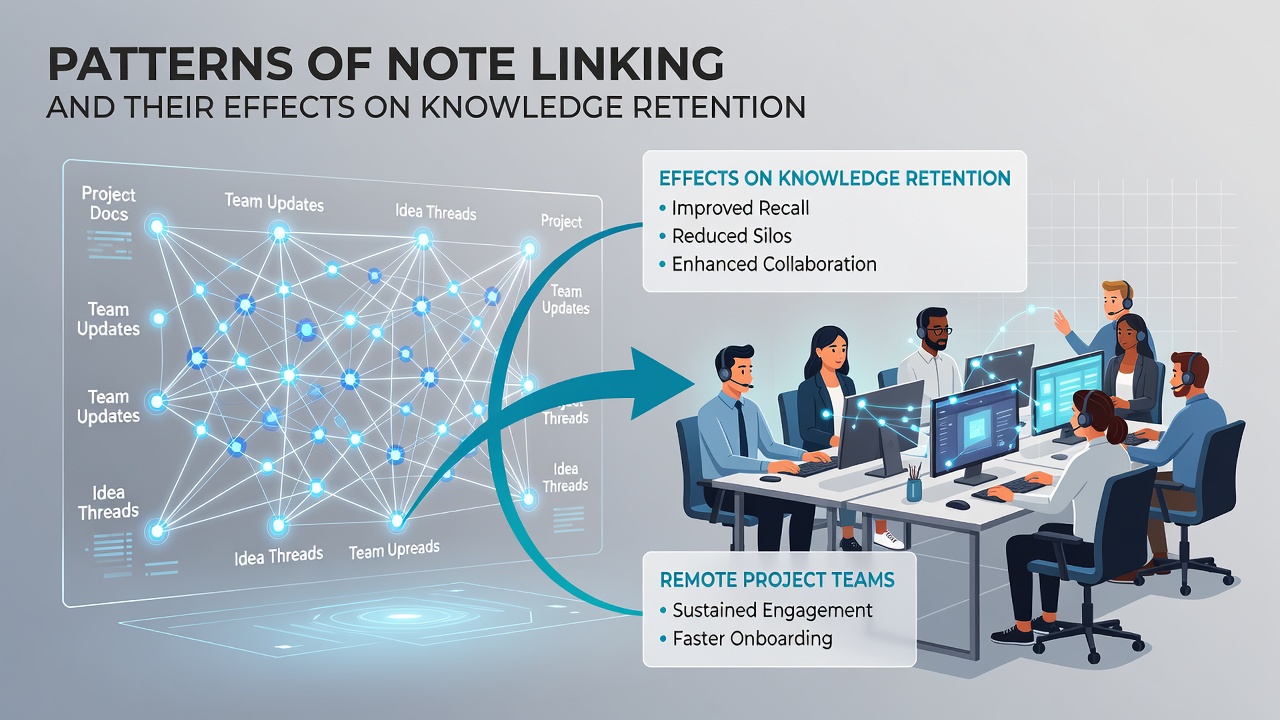
Remote project teams rely on digital note-taking systems where linking connects ideas across documents, and researchers track how different linking approaches shape long-term recall of project details. Studies from multiple institutions reveal that teams form clusters of notes around core topics while others create linear chains that follow task sequences, and these structures produce measurable differences in retention rates when members revisit materials months later.
Common Linking Structures Observed in Distributed Groups
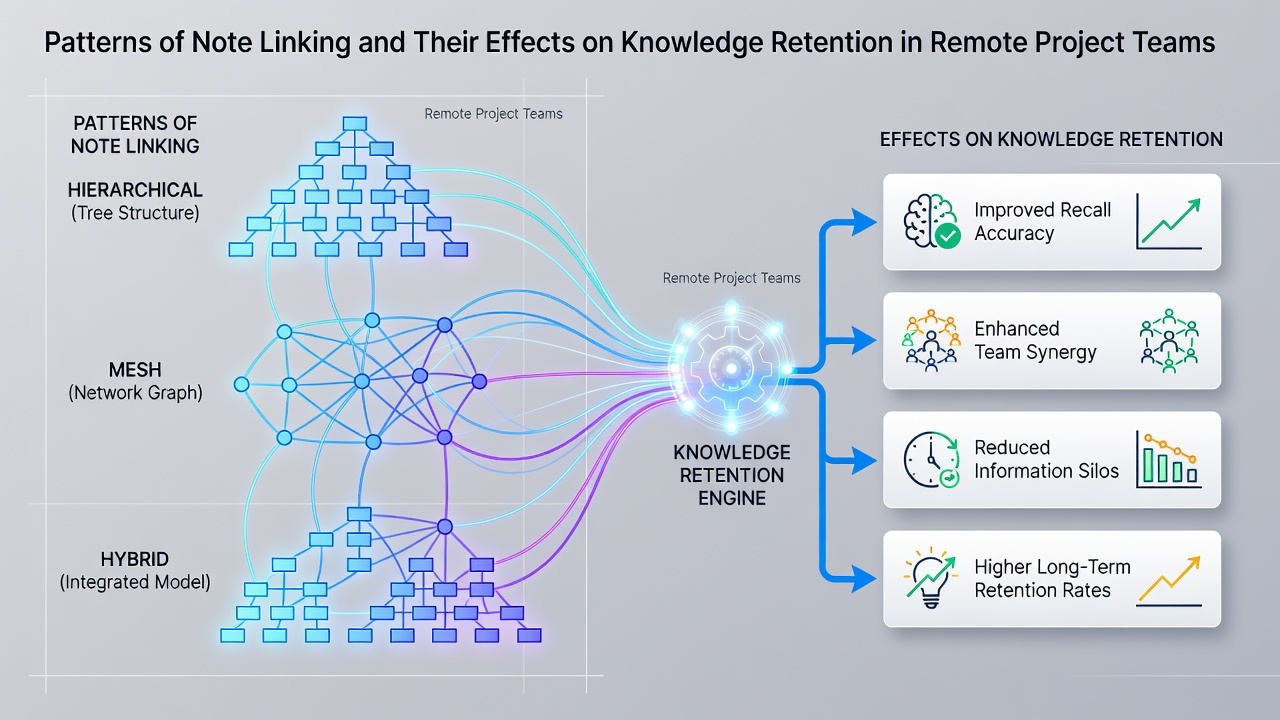
Teams using bidirectional links create networks where each note points to related content and receives incoming connections in return, whereas unidirectional links direct attention in one direction only. Data from workplace monitoring platforms in 2025 indicated that bidirectional structures appeared in 62 percent of high-performing remote engineering groups, while unidirectional patterns dominated in sales and marketing teams that emphasized sequential workflows. Observers note that hub-and-spoke arrangements concentrate connections around a few central notes, which often serve as project dashboards, and this configuration helps members locate key updates without scanning entire archives.
Retention Metrics Across Different Patterns
Knowledge retention measurements taken at three-month and six-month intervals show that teams employing dense, bidirectional linking retained 34 percent more technical specifications than groups using sparse connections, according to findings published by the University of Melbourne research group. Linear chains supported strong recall of procedural steps but weaker memory for contextual background information, and this distinction emerged clearly when participants answered questions about project history without access to their notes. Canadian government labor statistics from the same period documented that remote workers who accessed linked note systems at least twice weekly reported higher confidence in retrieving past decisions, although the data did not isolate causation from other collaboration habits.
Seasonal Shifts and Platform Usage Trends
In October 2026, platform analytics from several enterprise tools recorded a 19 percent rise in note creation among distributed teams, coinciding with end-of-year planning cycles and the integration of new AI-assisted linking features. Those increases aligned with greater use of contextual tags that automatically suggested connections based on content similarity, and teams adopting these suggestions showed faster retrieval speeds during audits of completed projects. Researchers at institutions across North America and Europe continue to examine whether automated suggestions strengthen or dilute deliberate linking practices that require manual review.
Team Size and Linking Complexity
Smaller groups of four to seven members tended toward tightly woven note clusters that referenced one another frequently, while larger teams of twenty or more produced broader but shallower link distributions. Evidence suggests the latter pattern reduced duplication of effort across time zones yet sometimes left peripheral contributors unaware of decisions recorded in less-visited branches of the note graph. Active voice usage in note titles, such as naming a document “Team A completed API integration on date X,” correlated with quicker orientation for new members joining mid-project, according to internal reviews conducted by several technology firms.
Cross-Regional Comparisons of Tool Adoption
Reports compiled by the Australian Bureau of Statistics highlighted that remote teams in the Asia-Pacific region favored templates with pre-built link structures for compliance documentation, whereas North American counterparts more often built custom connections tailored to agile sprint reviews. Both approaches supported retention when teams maintained consistent review schedules, and the difference lay mainly in the speed of onboarding rather than final recall accuracy. External analyses from the OECD on digital collaboration tools further indicated that organizations investing in training for deliberate linking practices observed steadier knowledge continuity during personnel transitions.
Conclusion
Patterns of note linking in remote project teams produce distinct effects on knowledge retention that vary with structure, frequency of access, and team scale. Bidirectional and hub-centered networks support broader recall of contextual details, while linear sequences aid procedural memory. Data collected through 2026 continues to inform how platforms evolve their linking recommendations, and organizations that align their note practices with measured retention outcomes maintain clearer continuity across distributed workforces.