Zoe Franke · 17 September 2026
Decoding Shifts in Engagement Patterns Following Platform Updates in Specialized Online Communities
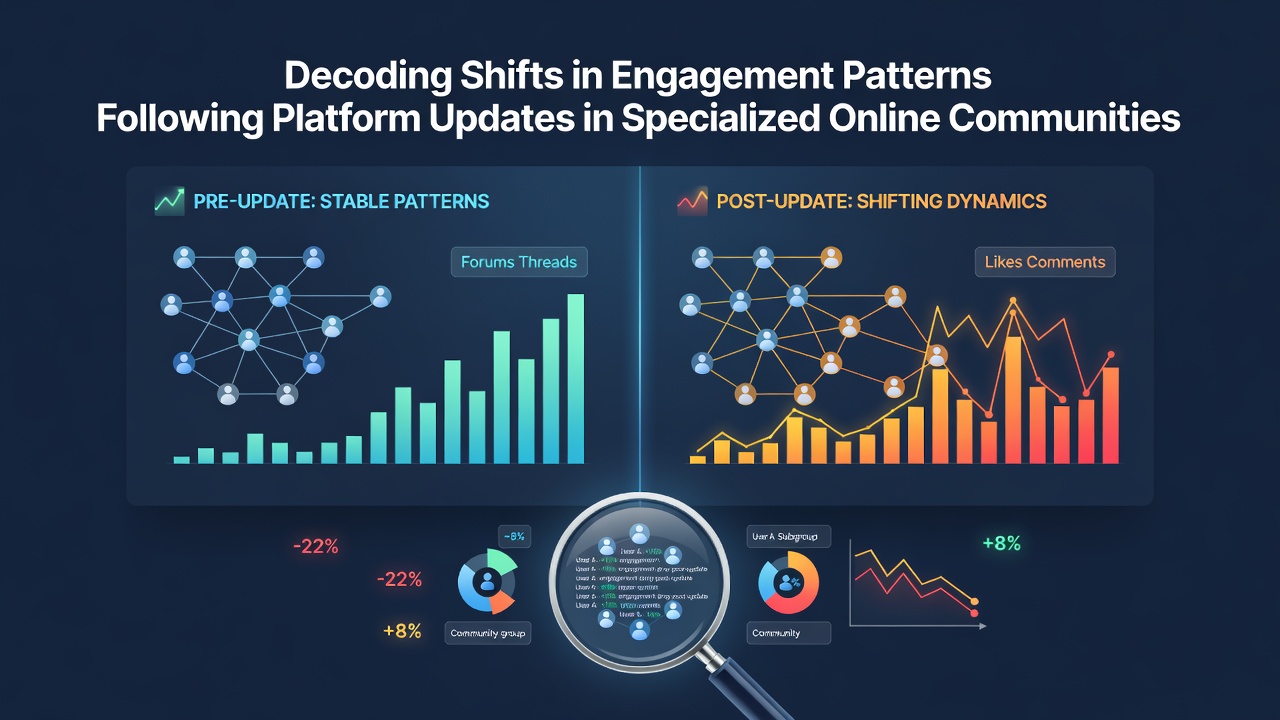
Platform updates in specialized online communities often trigger measurable changes in how users interact, participate, and sustain activity over time, and researchers track these patterns through quantitative metrics alongside qualitative observations from multiple regions. In September 2026 several major platforms serving hobbyist, professional, and interest-based groups introduced revised ranking algorithms along with new moderation tools, and subsequent data collections revealed consistent drops in certain types of posts while others gained traction.
Platform Changes and Their Immediate Context
Specialized communities on networks such as Discord servers focused on niche gaming or Reddit subgroups dedicated to technical troubleshooting received updates that prioritized content freshness and reduced visibility for older threads, while new interface elements encouraged shorter replies and quick reactions instead of extended discussions. These adjustments aligned with broader efforts to manage content volume and maintain user retention across high-traffic periods. Observers note that communities centered on academic research or creative writing experienced similar modifications around the same timeframe, resulting in altered distribution of comments and shares within the first weeks following deployment.
Tracking Engagement Through Established Metrics
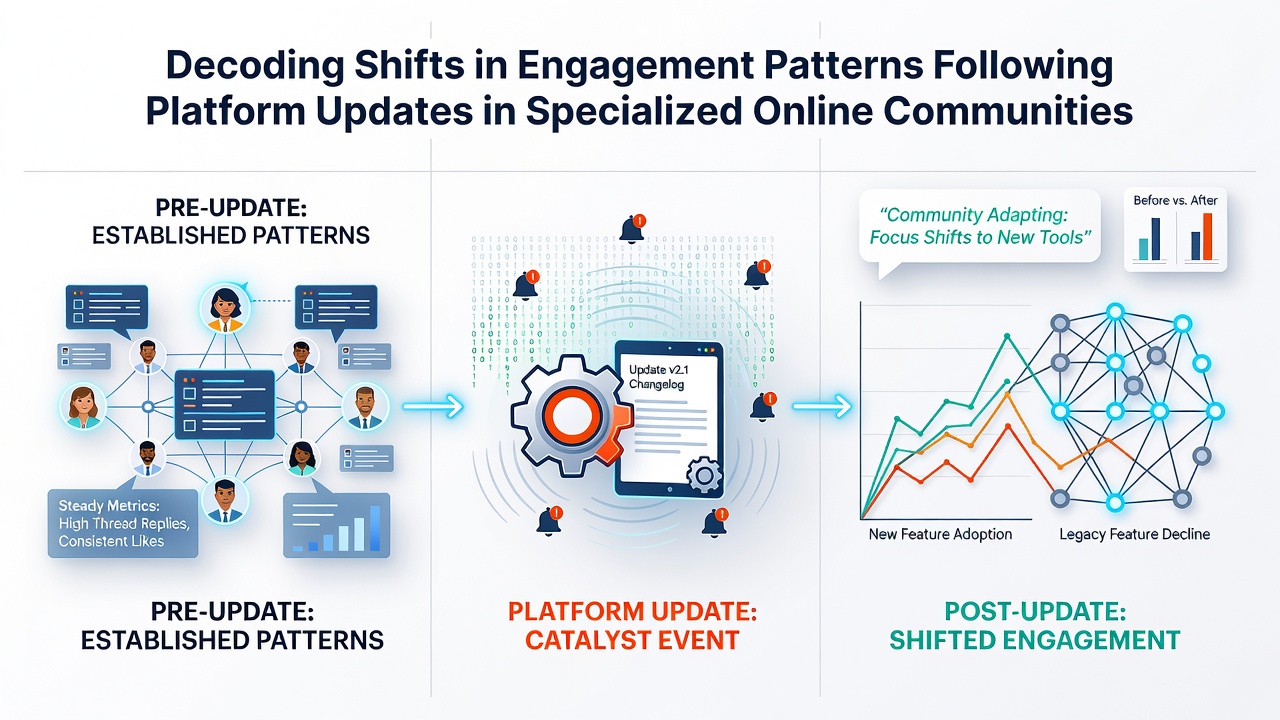
Analysts measure engagement through indicators including daily active users, average session duration, comment volume per post, and cross-post sharing rates, and studies conducted after the September 2026 rollouts show that reaction-based interactions increased by double-digit percentages in many hobby-focused groups while long-form reply chains declined. Data collected by independent research groups indicates that communities with strong moderator presence adapted more quickly, maintaining steady participation levels, whereas less structured forums saw sharper initial drops followed by gradual recovery in specific content categories. Government reports from Canadian digital policy offices highlight parallel trends in professional networking spaces where updated notification systems directed attention toward live events rather than archived resources.
Regional Variations in User Response
Communities operating under different regulatory environments displayed distinct adaptation speeds, and European platforms subject to digital services oversight recorded faster implementation of transparency features that influenced how members discovered new threads. In contrast, groups based in Australia and the United States relied more on internal community guidelines to guide behavior after ranking changes took effect. Research from academic institutions across these regions documents that users in technical support communities shifted toward direct messaging and private channels when public visibility decreased, while creative collectives increased use of collaborative tools introduced in the same updates.
Content Type Shifts and Community Adaptation
Shorter visual posts and poll-style questions gained prominence in multiple specialized forums after the updates, whereas detailed tutorial threads lost initial reach until community members developed new formatting strategies to comply with visibility criteria. According to Pew Research Center analyses of online group dynamics, these patterns mirror earlier observations from broader social platforms yet appear more pronounced in tightly focused interest groups where members maintain high expectations for content relevance. Industry reports from European digital research consortia further note that engagement recovered when moderators introduced pinned resource lists and scheduled live sessions that aligned with the new algorithmic preferences.
Factors Shaping Long-Term Patterns
Community size, topic sensitivity, and existing moderation infrastructure each contribute to how engagement evolves following platform modifications, and longitudinal tracking reveals that groups emphasizing knowledge sharing retained higher comment quality even when overall volume fluctuated. Observers have documented cases where hobbyist collectives reorganized their posting schedules around peak activity windows identified through updated analytics dashboards, leading to renewed participation from previously less active members. Data from university-led studies in North America and the Asia-Pacific region shows that consistent communication from platform operators about upcoming changes correlates with smoother transitions and fewer abrupt drops in daily interactions.
Conclusion
Specialized online communities continue to demonstrate resilience when facing platform-driven changes, and the shifts recorded after September 2026 updates illustrate how metric adjustments influence content preferences and interaction styles across diverse interest areas. Ongoing monitoring by academic and policy researchers provides clearer pictures of adaptation mechanisms, while communities themselves refine internal practices to sustain meaningful exchanges under evolving technical conditions. These documented patterns offer reference points for future analysis of engagement dynamics in niche digital spaces.